Book Appointment

Uterine Fibroids: Diagnosis and Treatment in South Delhi

Uterine Fibroids Diagnosis and Treatment in South Delhi - Dr Sunita Arora
Gynaecology & Laparoscopic Surgery

Uterine Fibroids

Being told you have a fibroid in your uterus can be alarming, but fibroids are very common and, in most cases, are not cancerous. Many women with fibroids never have symptoms, while others face heavy periods, pelvic pressure or difficulty conceiving. The right approach depends on the size and position of the fibroids, your symptoms, your age and whether you want to have children.

This page explains what fibroids are, their symptoms and types, how they are diagnosed, and the treatment options, from observation and medicines to minimally invasive and surgical procedures. It is general educational information. Your own plan can only be made after a personal consultation.

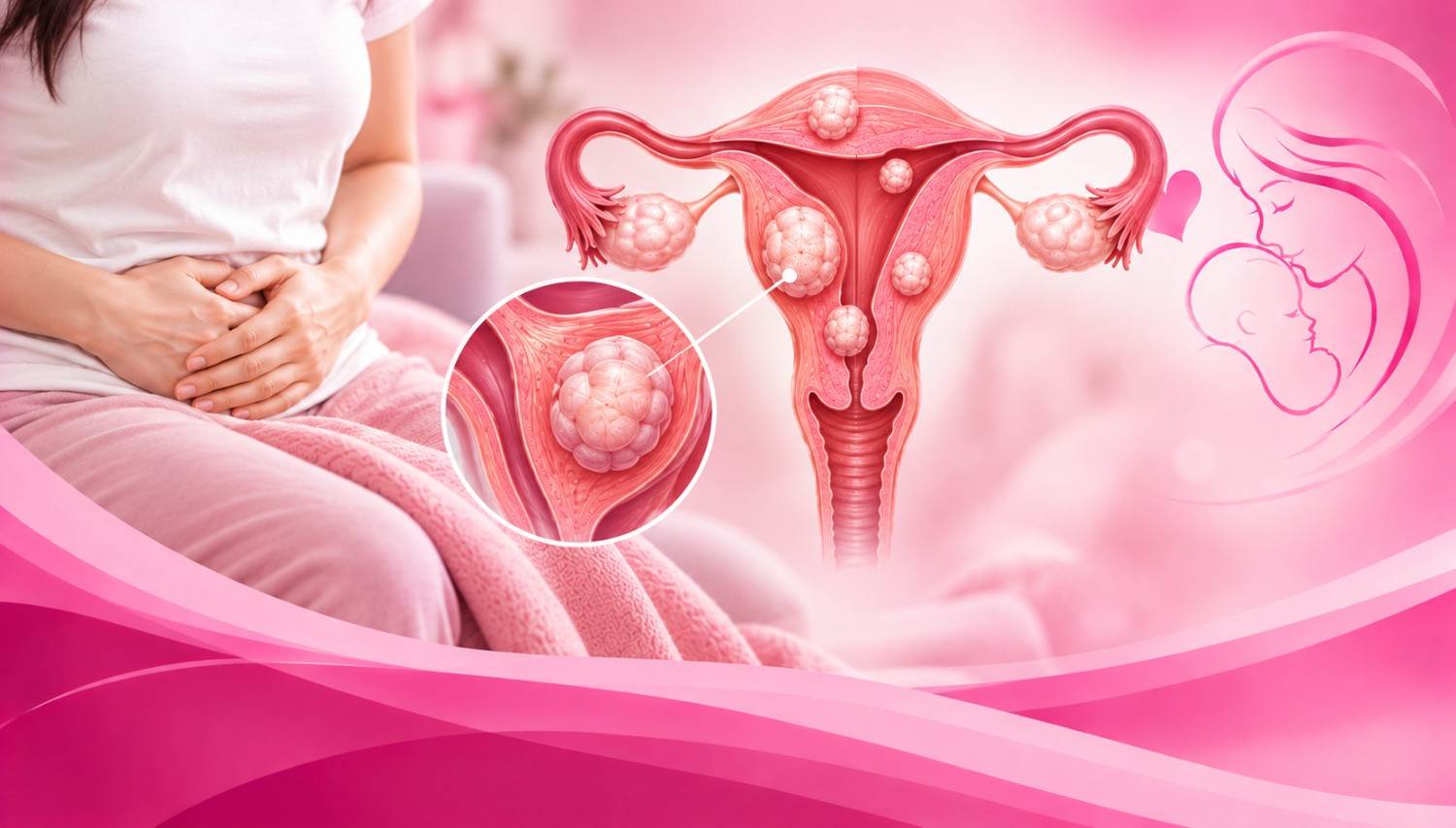
What Are Uterine Fibroids?

Uterine fibroids, also called leiomyomas or myomas, are non-cancerous growths that develop from the muscle of the uterus. They can be as small as a pea or as large as a melon, and a woman may have one or several. They are most commonly found in women during their reproductive years, and they tend to shrink after menopause, when oestrogen levels fall.

The exact cause is not fully understood. Hormones, mainly oestrogen and progesterone, and genetic factors appear to influence their growth. Fibroids are more likely with a family history, increasing age through the reproductive years, early start of periods and being overweight.

Types of Fibroids by Location

The location of a fibroid is often more important than its size when it comes to symptoms and treatment.

Submucosal Fibroids

Submucosal fibroids grow into the uterine cavity. They are the most likely to cause heavy bleeding and can affect fertility and implantation.

Intramural Fibroids

Intramural fibroids grow within the muscular wall of the uterus and may enlarge the uterus, cause heavy periods or pressure, and sometimes affect fertility if they are large or distort the cavity.

Subserosal Fibroids

Subserosal fibroids grow on the outer surface of the uterus and may press on the bladder or bowel without changing the periods much.

Pedunculated Fibroids

Pedunculated fibroids hang from a stalk, either inside the cavity or outside the uterus, and can occasionally twist and cause sudden pain.

Cervical Fibroids

Cervical fibroids arise in the cervix and may cause bleeding or obstruct the passage.

Symptoms of Uterine Fibroids

Many fibroids cause no symptoms and are found incidentally on a scan. When symptoms occur, they may include:

Heavy, prolonged or painful periods, sometimes with clots, which can lead to anaemia and tiredness.
Bleeding between periods.
Pelvic pressure, a feeling of fullness or bloating, or an enlarged lower abdomen.
Frequent urination or difficulty emptying the bladder.
Constipation or lower back pain.
Pain during intercourse.
Difficulty conceiving or repeated miscarriage, in some women.

Urgent Medical Attention: Sudden, severe pelvic pain, or heavy bleeding with dizziness or fainting, needs urgent medical attention.

When Should You See a Doctor?

Please consult a gynaecologist if you have heavy or prolonged periods, pelvic pain or pressure, bleeding between periods, difficulty conceiving or repeated pregnancy loss, or if a scan has shown a fibroid. It is also important to be evaluated if a known fibroid seems to be growing quickly, or if you develop new bleeding after menopause.

How Uterine Fibroids Are Diagnosed

A thorough evaluation combining medical history, clinical examination, pelvic imaging, and blood tests.

Step 01

History and Pelvic Examination

Your doctor will ask about your periods, symptoms and family and pregnancy plans. A pelvic examination may reveal an enlarged or irregular uterus.

Step 02

Ultrasound

A pelvic ultrasound, often transvaginal as well as abdominal, is the main test. It shows the number, size and position of the fibroids and helps to tell them apart from other conditions such as adenomyosis or ovarian cysts.

Step 03

Further Imaging and Hysteroscopy

If more information is needed, saline sonography or hysteroscopy can show whether a fibroid is distorting the uterine cavity, and MRI may be used in selected cases, for example before planning surgery or when the diagnosis is uncertain.

Step 04

Blood Tests

A blood count and iron studies check for anaemia, and other tests may be added depending on your symptoms.

Treatment of Uterine Fibroids

Not every fibroid needs treatment. The plan depends on your symptoms, the size and location of the fibroids, your age and your fertility wishes.

Watchful Waiting

If fibroids are small and cause no problems, regular monitoring with symptom review and periodic ultrasound is often enough. Fibroids usually shrink after menopause.

Medicines

Medicines can reduce symptoms but do not remove the fibroids permanently. Options include tranexamic acid and anti-inflammatory medicines to reduce heavy bleeding and pain, hormonal treatments such as a hormone-releasing intrauterine system or other hormonal medicines, and iron supplements for anaemia. Certain medicines that lower oestrogen can temporarily shrink fibroids and are usually used for a limited period, for example to improve anaemia or to prepare for surgery. Your doctor will explain which options suit you, particularly if you are trying to conceive.

Hysteroscopic Myomectomy

Submucosal fibroids can often be removed through the cervix with a hysteroscope, without any cuts on the abdomen. This is a common option for women with heavy bleeding or fertility problems caused by fibroids inside the cavity.

Laparoscopic Myomectomy

In suitable cases, fibroids can be removed through small keyhole incisions while preserving the uterus. This is often an option for women with a limited number of fibroids of moderate size who wish to preserve fertility, although very large or numerous fibroids may need open surgery.

Open (Abdominal) Myomectomy

For very large or multiple fibroids, or when keyhole surgery is not suitable, the fibroids can be removed through an abdominal incision, again with the uterus preserved.

Hysterectomy

Removal of the uterus is a definitive treatment for fibroids because they cannot return. It is usually considered for women who have completed their families and whose symptoms are significant, or when other treatments have not worked. It ends the ability to conceive, and the decision about whether to remove the ovaries is made separately and individually.

Other Uterus-Sparing Procedures

Uterine artery embolisation, which reduces the blood supply to fibroids, and other image-guided techniques such as focused ultrasound or radiofrequency ablation, may be options in selected women. Availability and suitability vary, and fertility outcomes after these procedures are less established than after myomectomy, so they are considered with care in women who want to conceive.

As with any surgery, the risks include bleeding, infection, injury to nearby organs, adhesions and the possibility that new fibroids grow later. Your doctor will explain the specific risks and benefits of the option proposed for you.

Fertility, Pregnancy & Differential Diagnosis

Understanding how uterine fibroids affect conception and pregnancy, and distinguishing fibroids from other gynaecological conditions.

Conception & Maternal Care

Fibroids, Fertility and Pregnancy

Most women with fibroids conceive and have healthy pregnancies. However, fibroids that distort the uterine cavity, particularly submucosal fibroids, and some large intramural fibroids may reduce the chance of conception or increase the risk of miscarriage. Removing such fibroids may improve the chance of pregnancy, but it does not guarantee it, and other fertility factors are also assessed.

During pregnancy, fibroids may grow or cause pain, and they occasionally increase the risk of complications such as an abnormal position of the baby, bleeding or preterm labour, or the need for a caesarean delivery.

Post-Myomectomy Guidance: After a myomectomy, your doctor will advise on the best timing for trying to conceive and on the mode of delivery, since some deep incisions in the uterine wall can influence this decision. Please see our page on female infertility for more on evaluation when you are trying to conceive.

Accurate Evaluation

Fibroids or Something Else?

Fibroids are almost always benign. Cancer of the uterine muscle (sarcoma) is very rare, but rapid growth, new growth after menopause or unusual bleeding should always be evaluated. Other conditions, such as adenomyosis, polyps, and ovarian cysts, can mimic fibroids, so a proper scan and examination are important.

Benign Nature: Fibroids are almost always benign; cancer of the uterine muscle (sarcoma) is very rare.
Signs to Evaluate: Rapid growth, new growth after menopause, or unusual bleeding should always be checked by a doctor.
Mimicking Conditions: Adenomyosis, endometrial polyps, and ovarian cysts can mimic fibroids and require a proper scan and examination.
Specialist Expertise

Consult Dr. Sunita Arora for Uterine Fibroids in South Delhi

Dr. Sunita Arora is an obstetrician, gynaecologist and laparoscopic surgeon with more than 23 years of experience. She holds an MBBS from Lady Hardinge Medical College, New Delhi, and an MD in Obstetrics and Gynaecology from UCMS and GTB Hospital, and she is a Fellow of the Indian College of Obstetricians and Gynaecologists (FICOG) and a Fellow of the International College of Surgeons (FICS). She completed a fellowship in Reproductive Medicine at D.Y. Patil University, Mumbai.

Her special interests include endoscopic surgery and infertility, so medical treatment, minimally invasive options and fertility considerations can be discussed together, and the plan is tailored to your age, symptoms and family plans. She consults at Safdarjung Enclave and is also associated with Fortis La Femme, Greater Kailash II, serving women across South Delhi, including Greater Kailash, Green Park, Hauz Khas and nearby areas.

Medical treatment, minimally invasive options and fertility considerations are discussed together, tailored to your age, symptoms and family plans.

Clinic Locations

Book a Consultation

If you have heavy periods, pelvic pressure, difficulty conceiving, or a scan showing fibroids, a careful evaluation can help you understand your options without pressure.

01
Safdarjung Enclave

Dr Sunita Arora Fertility and Gynae Clinic

02
Greater Kailash II

Fortis La Femme, South Delhi

Book an appointment with Dr. Sunita Arora, and bring any previous scans and reports.

Frequently Asked Questions

Find answers to common questions about uterine fibroids, non-surgical treatments, myomectomy recovery, and fertility.

No. Fibroids that are small and cause no symptoms often only need observation. Treatment is considered when there are symptoms, anaemia, fertility problems or other concerns.

Fibroids are almost always benign, and the risk of cancer is very low. Rapidly growing fibroids or new growth after menopause should be checked by a doctor.

Medicines can control heavy bleeding and pain, and some procedures, such as embolisation, avoid conventional surgery. These options help many women, but they differ in how long they work and in their suitability for women who want to conceive.

New fibroids can develop after myomectomy in some women, because the tendency to form fibroids remains. Hysterectomy is the only treatment that prevents recurrence entirely.

Many women do. Fibroids that distort the uterine cavity may reduce fertility, and your doctor will assess whether removal is likely to help in your situation.

Many women resume light activity within days and return to normal routines within a few weeks, but the recovery depends on the size and number of fibroids removed. Your doctor will give personalised advice.

Medical disclaimer: This page is for general educational purposes and does not replace personalised medical advice, diagnosis or treatment. Please consult a qualified doctor about your own health. If you have severe abdominal pain, heavy bleeding, fainting or fever, seek urgent medical care.