Book Appointment

Endometriosis: Comprehensive Care and Treatment in South Delhi

Endometriosis: Comprehensive Care and Treatment in South Delhi - Dr Sunita Arora
Gynaecology, Fertility & Endoscopic Care

Endometriosis

Painful periods that are dismissed as normal, pain during intercourse, or months of trying to conceive without success can all be signs of endometriosis. Many women live with symptoms for years before the condition is recognised, partly because period pain is so often considered something to put up with. If this sounds familiar, please know that your symptoms are real, and that effective care is available.

This page explains what endometriosis is, its symptoms and effect on fertility, how it is diagnosed, and the range of treatments from pain relief and hormonal therapy to minimally invasive surgery. It is general educational information. Your own plan can only be made after a personal consultation.
What Is Endometriosis?

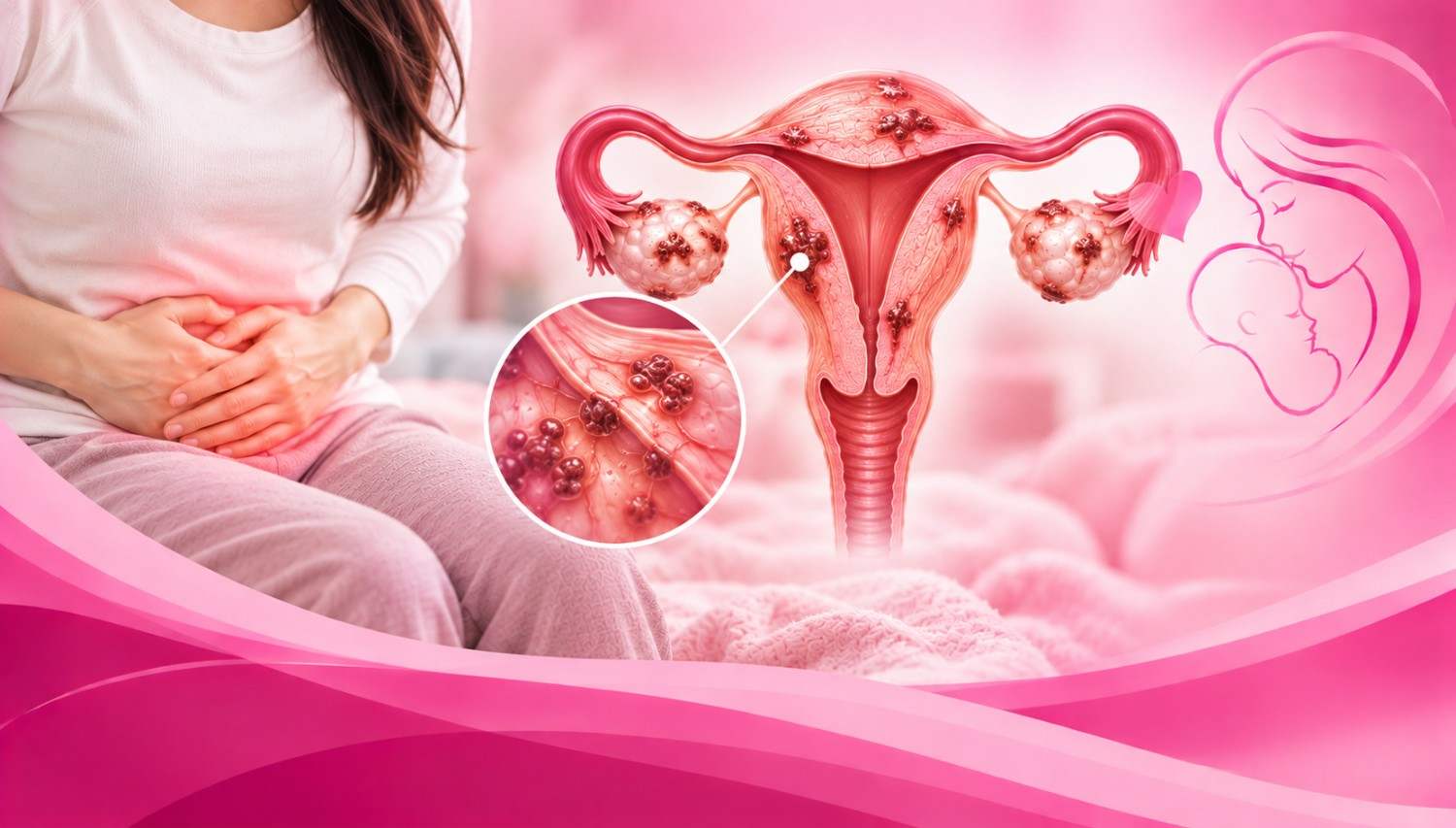
Endometriosis is a long-term condition in which tissue similar to the lining of the uterus (the endometrium) grows outside the uterus. These deposits most commonly occur on the ovaries, the lining of the pelvis, the fallopian tubes and the ligaments that support the uterus, and less often on the bowel or bladder. Like the lining of the uterus, this tissue responds to monthly hormonal changes, which can cause inflammation, pain, scarring and adhesions that may bind pelvic organs together.

When endometriosis involves the ovary, it can form a cyst filled with old blood, called an endometrioma or 'chocolate cyst'. The exact cause is not fully understood. Factors that may contribute include backward flow of menstrual blood, genetic factors, immune system differences and hormonal influences. It is not caused by anything a woman did or did not do, and it is not contagious.

When Should You See a Doctor?

Please consult a gynaecologist if you have period pain that disrupts your daily life, pelvic pain that is persistent, pain with intercourse, bowel or bladder symptoms linked to your periods, or if you have been trying to conceive without success for 12 months, or 6 months if you are 35 or older.

Urgent Care: Seek urgent care for sudden, severe abdominal pain, fainting or fever.

Symptoms of Endometriosis

Symptoms vary widely. Some women have severe pain with small amounts of disease, while others with extensive disease have few symptoms. Common symptoms include:

Painful periods that may worsen over time or are not relieved by usual pain medicines.
Chronic pelvic or lower abdominal pain, including pain outside of periods.
Pain during or after intercourse.
Pain during bowel movements or while passing urine, particularly during periods.
Heavy or irregular periods, or spotting before periods.
Difficulty conceiving.
Fatigue, bloating, nausea and mood changes.

Many of these symptoms overlap with other conditions, such as adenomyosis, fibroids, pelvic infection and irritable bowel syndrome, which is why a careful evaluation is needed.

How Endometriosis Is Diagnosed

A thorough evaluation combines clinical history, physical examination, targeted imaging, and diagnostic procedures when required.

Step 01

History and Examination

Your doctor will ask about your pain pattern, periods, bowel and bladder symptoms, pain during intercourse, previous treatments and fertility plans. A pelvic examination may reveal tenderness, nodules or fixed pelvic organs, though it can also be normal.

Step 02

Ultrasound

A transvaginal ultrasound is the first-line imaging test. It can show endometriomas and signs of deeper disease, though it may not show small superficial deposits.

Step 03

MRI

MRI may be used when deep endometriosis involving the bowel, bladder or other structures is suspected, and for surgical planning.

Step 04

Laparoscopy

Laparoscopy allows the surgeon to see endometriosis directly and, in the same sitting, to remove or treat it. A tissue sample may be taken for confirmation. Current guidance does not require laparoscopy for every woman, and treatment can sometimes start based on symptoms and imaging. It is considered when imaging is inconclusive, when symptoms persist despite treatment, or when surgery is needed for pain or fertility. Please see our page on laparoscopy for more detail.

Step 05

Blood Tests

There is no reliable blood test for endometriosis. A test called CA-125 may be raised in endometriosis but is not used to diagnose it. Blood tests may be advised to check for anaemia, ovarian reserve or other conditions.

Classification

Stages of Endometriosis

Endometriosis is commonly classified from minimal to severe (stages I to IV) based on the extent of the disease and the presence of cysts and adhesions. The stage does not always match the severity of symptoms, so treatment is decided based on your symptoms, goals and findings, not the stage alone.

Treatment of Endometriosis

There is currently no permanent cure, but symptoms can be managed effectively, and the treatment is tailored to the individual. The main aims are to control pain, preserve fertility where desired and prevent progression.

Pain Relief

Anti-inflammatory pain relievers, taken as advised, can help with period pain. Heat application, regular exercise, adequate sleep and stress management can also reduce pain. Pelvic floor physiotherapy and pain-management support may help women with persistent pain.

Hormonal Treatment

Hormonal treatments reduce or stop periods and suppress the growth of endometriosis. Options include combined hormonal pills, progestin-only medicines, a hormone-releasing intrauterine system and, in selected cases, medicines that temporarily suppress ovarian hormones. These can reduce pain, but they do not remove existing cysts or adhesions, and they prevent pregnancy while being used. Symptoms may return after stopping treatment. Your doctor will select the option that suits your age, symptoms, side-effect profile and pregnancy plans.

Surgical Treatment

Surgery, usually by laparoscopy, can remove or treat endometriosis deposits, endometriomas and adhesions, and may relieve pain and improve fertility in selected women. For endometriomas, the surgeon aims to preserve healthy ovarian tissue, because surgery can reduce ovarian reserve, and this is weighed carefully, especially in women who want to conceive. Deep disease involving the bowel or bladder needs careful planning and, sometimes, a multidisciplinary team. Endometriosis can recur after surgery, and hormonal treatment may be advised afterwards for women who are not trying to conceive.

Fertility Treatment

Depending on your situation, options may include timed intercourse or IUI with ovulation monitoring, surgery to treat disease, and IVF. IVF may be recommended for women with reduced ovarian reserve, tubal damage, more severe disease, older age or when other treatments have not worked. Hormonal suppression is not a fertility treatment, and it is not recommended simply to improve the chance of pregnancy. Please see our pages on ovulation study and monitoring, IUI and IVF.

Hysterectomy

Removal of the uterus, with or without the ovaries, is sometimes considered for severe, persistent symptoms in women who have completed their families and in whom other treatments have not worked. It is a major decision, and the ovaries may be kept or removed after careful discussion. It does not guarantee complete relief if disease remains elsewhere.

Fertility & Long-Term Wellbeing

Understanding how endometriosis affects conception and practical ways to support your daily health and emotional wellbeing.

Conception Support

Endometriosis and Fertility

Endometriosis is found in a significant proportion of women who have difficulty conceiving. It can reduce fertility through inflammation in the pelvis, scarring and adhesions that distort the tubes and ovaries, effects on the quality of eggs, and, when ovarian endometriomas are present, a reduction in ovarian reserve. At the same time, many women with endometriosis conceive naturally, and many others succeed with treatment.

Fertility Care Note: The right plan depends on your age, ovarian reserve, the severity of the disease, tubal status, how long you have been trying and your partner's semen quality. Please see our page on female infertility for the broader evaluation.

Holistic Care

Living with Endometriosis

Endometriosis is a long-term condition, and care often includes more than one approach.
It can affect energy, relationships, work and emotional wellbeing, and it is normal to feel frustrated or low.
Please tell your doctor if you are struggling, as counselling and support are a legitimate part of treatment.
A balanced diet, regular activity, adequate sleep and good communication with your partner and family can help, although no diet has been proven to cure the condition.
Specialist Expertise

Consult Dr. Sunita Arora for Endometriosis Care in South Delhi

Dr. Sunita Arora is an obstetrician, gynaecologist and laparoscopic surgeon with more than 23 years of experience. She holds an MBBS from Lady Hardinge Medical College, New Delhi, and an MD in Obstetrics and Gynaecology from UCMS and GTB Hospital, and she is a Fellow of the Indian College of Obstetricians and Gynaecologists (FICOG) and a Fellow of the International College of Surgeons (FICS). She completed a fellowship in Reproductive Medicine at D.Y. Patil University, Mumbai, and received IVF training at RMA, Mount Sinai, New York.

Her special interests include endoscopic surgery, infertility, IUI and IVF, so pain management, surgery and fertility planning can be considered together under one roof.

If you have painful periods, pelvic pain, pain during intercourse or difficulty conceiving, a careful evaluation can bring answers and a plan that fits your goals.

Clinic Locations

Book a Consultation

She consults at Safdarjung Enclave and is also associated with Fortis La Femme, Greater Kailash II, serving women across South Delhi, including Greater Kailash, Green Park, Hauz Khas and nearby areas.

01
Safdarjung Enclave

Dr Sunita Arora Fertility and Gynae Clinic

02
Greater Kailash II

Fortis La Femme, South Delhi

Book an appointment with Dr. Sunita Arora, and bring any previous scans and reports.

Frequently Asked Questions

Find answers to common questions about endometriosis, symptoms, diagnosis, fertility, and treatment options.

Mild cramps are common, but pain that disrupts daily life, worsens over time or does not respond to usual pain relief is not something you need to accept. It may point to endometriosis or another treatable condition.

No. Many women with endometriosis conceive naturally. Others need treatment, and the chance depends on age, severity, ovarian reserve and other factors. Early advice is helpful if you are planning pregnancy.

There is no permanent cure at present, but symptoms can be well controlled, and surgery can remove visible disease. The condition can return, so long-term follow-up and, sometimes, ongoing medical treatment are important.

Pregnancy may relieve symptoms for some women because periods stop temporarily, but it does not cure the condition, and symptoms can return afterwards.

Not always. Diagnosis and treatment may begin on the basis of symptoms and imaging. Laparoscopy is considered in specific situations, such as persistent pain, unclear imaging or when surgery is needed for treatment or fertility.

The overall risk is low, but a small increase in the risk of certain ovarian cancers has been reported. Regular follow-up of cysts and prompt evaluation of any change are advised. Most women with endometriosis do not develop cancer.

Medical disclaimer: This page is for general educational purposes and does not replace personalised medical advice, diagnosis or treatment. Please consult a qualified doctor about your own health. If you have severe abdominal pain, heavy bleeding, fainting or fever, seek urgent medical care.