Book Appointment

Recurrent IVF Failure Assessment in South Delhi

Recurrent IVF Failure Assessment - Dr Sunita Arora
Reproductive Medicine & IVF Care

Recurrent IVF Failure Assessment

An unsuccessful IVF cycle is painful. When it happens two, three or more times, the disappointment is often mixed with exhaustion, self-doubt and a sense of not knowing what to do next. If this is your experience, please know that repeated IVF failure is a recognised clinical problem, and that a structured, individual review can often clarify what may have gone wrong and what can reasonably be changed.

This page explains what recurrent IVF failure (also called recurrent implantation failure) means, the factors that may contribute, how a specialised evaluation is carried out, and the management options, including what is supported by evidence and what is not. It is general educational information. Your plan can only be made after a personal review of your records and a clinical assessment.

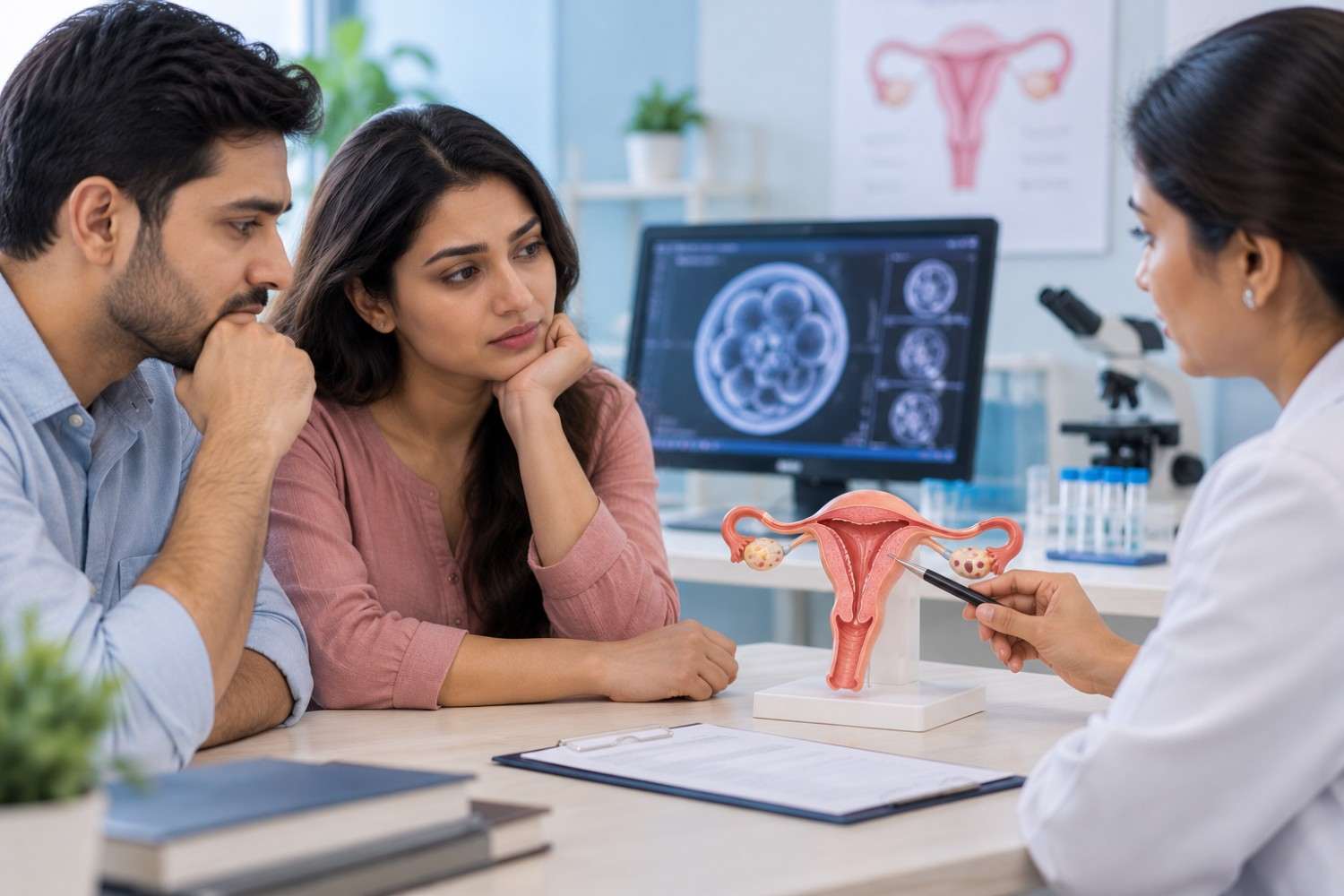
What Is Recurrent IVF Failure?

Recurrent implantation failure (RIF) generally describes a situation in which a couple does not achieve a pregnancy after several embryo transfers, despite the transfer of embryos that appear to be of good quality. There is no single universal definition. Many clinics consider the problem after two to three unsuccessful transfers, and professional guidance, such as that from ESHRE, uses specific criteria based on the number of cycles and good-quality embryos transferred in women under 40.

It is different from recurrent pregnancy loss, which refers to repeated miscarriages after a pregnancy has been established. The two can overlap, but the evaluation is not identical.

Why Can IVF Fail Repeatedly?

Successful implantation depends on three things working together: a genetically healthy embryo, a receptive uterine lining, and good synchronisation between the two. A problem in any of these areas can reduce the chance of pregnancy. Often more than one factor is involved, and sometimes no clear cause is found.

Embryo Factors: The most common reason an embryo does not implant is that it has a chromosomal abnormality, and this becomes more frequent with increasing maternal age. Other contributors can include egg or sperm quality, poor fertilisation, slow or arrested embryo development, and laboratory or culture conditions.
Uterine Factors: Structural problems inside the uterus, such as polyps, fibroids that distort the cavity, adhesions, a septum, adenomyosis or a thin endometrium, can interfere with implantation. Chronic endometritis (long-standing, low-grade inflammation of the lining) and a fluid-filled, damaged fallopian tube (hydrosalpinx) are also recognised contributors.
Endometrial Receptivity and Timing: The uterine lining is receptive to an embryo only during a limited window. If the lining is not well prepared or the timing is not ideal, implantation may be affected, although the role of specific receptivity tests remains debated.
Hormonal and Medical Factors: Thyroid disorders, diabetes or poorly controlled blood sugar, raised prolactin, vitamin deficiencies, obesity and certain autoimmune conditions can affect fertility outcomes and should be assessed when relevant.
Male Factor: Sperm quality, including abnormal morphology or high sperm DNA fragmentation, may contribute to poor embryo development in some couples.
Lifestyle and Treatment Factors: Smoking, alcohol, stress, sleep, the stimulation protocol used, and the technique and timing of embryo transfer can also play a part.

Management Options

Management is based on what the evaluation finds. It may include one or more of the following.

Treating an Identified Cause

Hysteroscopic removal of polyps, adhesions or a septum, surgery or other management for hydrosalpinx, treatment of chronic endometritis with appropriate medicines, correction of thyroid or other medical problems, and improvement of a thin lining where possible.

Optimising the IVF Cycle

Changing the stimulation protocol, improving egg and embryo quality where possible, ICSI where appropriate, culturing embryos to blastocyst stage, freezing embryos and transferring them in a carefully prepared later cycle, and refining the technique and timing of transfer.

Embryo Selection

Genetic testing of embryos (PGT-A) may be considered in selected situations, for example advanced maternal age or repeated pregnancy loss. Its benefit in unselected patients is not clearly established, and it has limitations, so it should be discussed carefully.

Specialised Evaluation for Repeated IVF Failure

The purpose of the assessment is to review your complete history and choose tests that are likely to change management, not to order every possible test. A typical evaluation may include the following steps.

Step 01

1. Detailed Review of Previous IVF Cycles

Your previous records are reviewed carefully: the stimulation protocol and drugs, the number and maturity of eggs, fertilisation results, embryo grading and development, the day and method of transfer, endometrial thickness and hormone levels. Often this review itself suggests what could be adjusted.

Step 02

2. Assessment of the Uterus

Pelvic ultrasound, with 3D imaging in selected cases, evaluates the uterus and ovaries. Hysteroscopy allows the cavity to be inspected directly and abnormalities such as polyps, adhesions or a septum to be treated. Tests for chronic endometritis or other endometrial conditions may be considered in selected women, and tubes may be checked for hydrosalpinx.

Step 03

3. Evaluation of Ovarian Reserve and Hormones

Tests such as AMH, antral follicle count and thyroid and other hormone levels help to refine the treatment plan and expectations, particularly in older women.

Step 04

4. Assessment of the Male Partner

A repeat semen analysis is advised, and in selected couples tests such as sperm DNA fragmentation may be considered.

Step 05

5. Genetic and Other Targeted Tests

Depending on your age, history and previous outcomes, chromosomal (karyotype) testing of the couple or genetic testing of embryos (PGT-A) may be discussed. Testing for clotting disorders or immune factors is not done routinely, since the evidence for most such tests is limited, but may be considered when there is a specific history, such as thrombosis or suspected antiphospholipid syndrome.

Evidence-Based Care, Counselling and Support

Understanding the role of add-on treatments, realistic next pathways, and the importance of emotional support during repeated IVF failure.

Evidence & Caution

Adjuncts and Add-On Treatments

Many add-ons are offered for repeated IVF failure, including endometrial scratching, intralipid infusions, steroids, intrauterine PRP or G-CSF, growth hormone, immunotherapy and others. Evidence for most of these is limited, inconsistent or absent, and some carry risks and costs.

A responsible approach is to use only those that have a clear indication, to explain the uncertainty honestly, and to avoid unproven treatments given routinely.
Pathways & Support

Realistic Counselling and Other Pathways

If repeated attempts with a thorough evaluation and optimisation do not succeed, your doctor will discuss realistic options with you, which may include further cycles, using donor eggs, sperm or embryos, a gestational carrier where legally permissible, or other family-building routes. This is an individual decision, made together and at your pace.

Emotional Support During Repeated IVF Failure: Repeated treatment failure takes a significant emotional and financial toll. It is reasonable to take a break, ask questions, seek a second opinion, or speak with a counsellor. A good fertility team will make time for these conversations.

Specialist Expertise

Consult Dr. Sunita Arora for IVF Failure Evaluation in South Delhi

Dr. Sunita Arora is an obstetrician, gynaecologist and fertility specialist with more than 23 years of experience. She holds an MBBS from Lady Hardinge Medical College, New Delhi, and an MD in Obstetrics and Gynaecology from UCMS and GTB Hospital, and she is a Fellow of the Indian College of Obstetricians and Gynaecologists (FICOG) and a Fellow of the International College of Surgeons (FICS). She completed a fellowship in Reproductive Medicine at D.Y. Patil University, Mumbai, and received IVF training at RMA, Mount Sinai, New York.

Her special interests include infertility, IUI, IVF and endoscopic surgery, which supports a complete assessment that looks at both the embryo and the uterus.

If you have had repeated unsuccessful IVF or embryo transfers, an unhurried review of your records can help identify the next best step.

Clinic Locations

Book a Consultation

She consults at Safdarjung Enclave and is also associated with Fortis La Femme, Greater Kailash II, serving couples across South Delhi, including Greater Kailash, Green Park, Hauz Khas and nearby areas.

01
Safdarjung Enclave

Dr Sunita Arora Fertility and Gynae Clinic

02
Greater Kailash II

Fortis La Femme, South Delhi

Book an appointment with Dr. Sunita Arora, and bring all your previous IVF reports, scans and prescriptions.

Frequently Asked Questions

Find answers to common questions about recurrent IVF failure, diagnostic testing, add-on treatments, and future pregnancy chances.

There is no single definition. Many clinics start a detailed evaluation after two to three unsuccessful embryo transfers, and earlier in women who are older or have known risk factors.

A second opinion can be valuable, especially if the cause has not been clearly identified. Bring complete records of your previous cycles, including protocols, embryo reports and transfer details, so that they can be reviewed properly.

No. Embryo quality, particularly chromosomal normality, is a very common reason, but uterine, hormonal, sperm-related and other factors may contribute, which is why a full evaluation is useful.

Not necessarily. These tests may be considered in selected situations, but their benefit is not proven for everyone. Your doctor will explain whether they are likely to help in your case.

Evidence for most immune treatments is limited, and routine use is not recommended. They may be considered only in specific situations, after discussing benefits, risks and costs.

Many couples go on to succeed after a careful review and individualised changes, but outcomes cannot be guaranteed. Your chances depend on your age, ovarian reserve, embryo quality, uterine health and other factors, which your doctor will discuss with you honestly.

Medical disclaimer: This page is for general educational purposes and does not replace personalised medical advice, diagnosis or treatment. Please consult a qualified doctor about your own health. If you have severe abdominal pain, heavy bleeding, fainting or fever, seek urgent medical care.