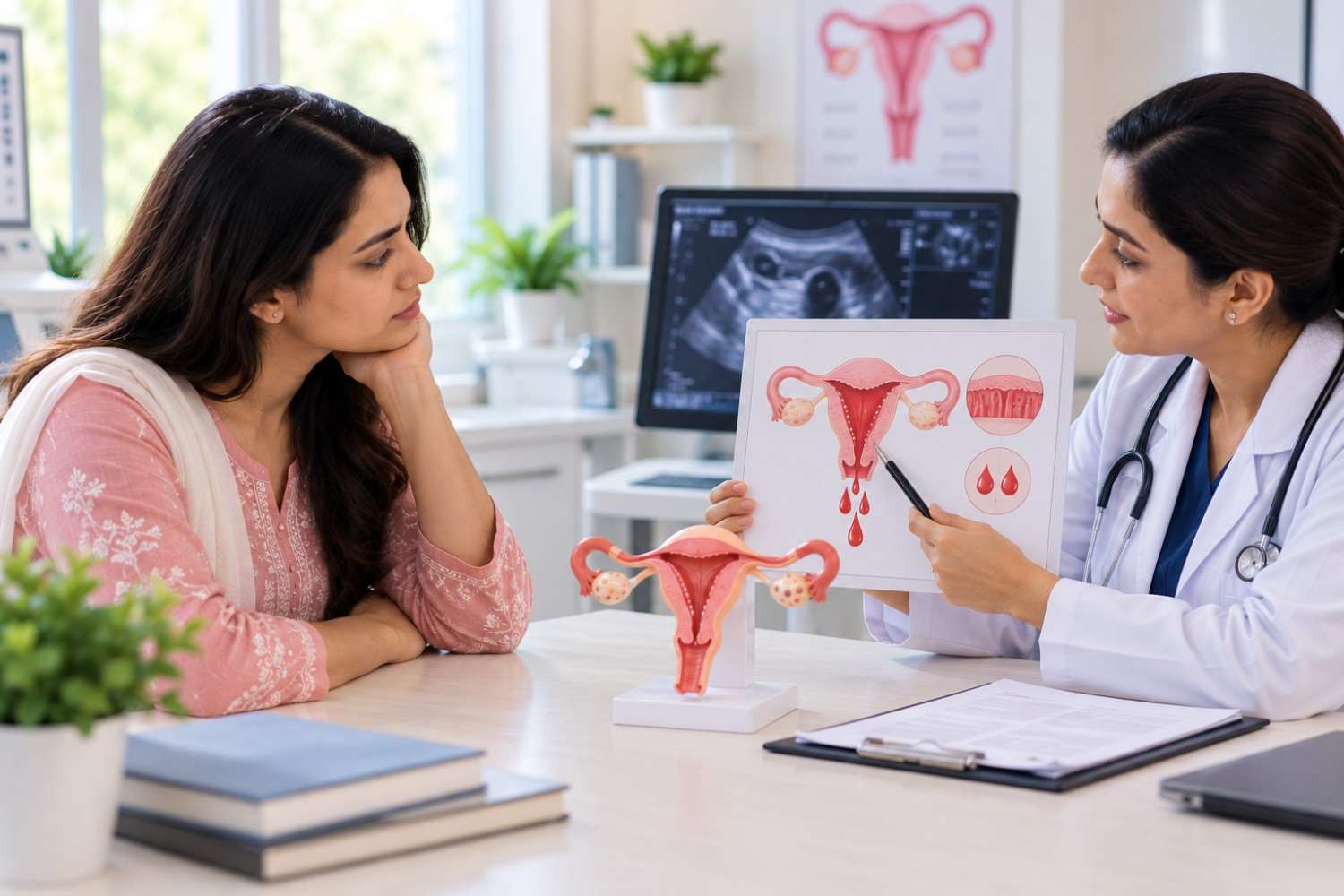
Heavy periods can take over your life. You may plan your day around the nearest bathroom, worry about stains, miss work or social events, or feel constantly tired. Many women assume this is simply how their periods are and put up with it for years. In fact, heavy menstrual bleeding, medically called menorrhagia, is a common and treatable problem, and there is no need to suffer in silence.
This page explains what counts as heavy menstrual bleeding, its common causes, when to see a doctor, how it is investigated, and the medical and surgical treatments available. It is general educational information. Your own plan can only be made after a personal consultation.
Heavy menstrual bleeding is excessive blood loss during periods that interferes with a woman's physical, emotional, social or work life. Doctors traditionally defined it as losing more than about 80 ml of blood in a cycle, but this is hard to measure at home, so in practice it is judged by how the bleeding affects you.
Please consult a gynaecologist if your periods are heavy enough to affect your daily life, last longer than seven days, or have recently become heavier than usual. It is also important to be evaluated if you have bleeding between periods, bleeding after intercourse, bleeding after menopause, or symptoms of anaemia such as tiredness, breathlessness and palpitations.
Urgent Care: Seek urgent medical care if you are soaking through more than one pad or tampon every hour for two hours or more, feel faint or dizzy, have severe abdominal pain, or have heavy bleeding while pregnant or possibly pregnant.
In practice, heavy menstrual bleeding is judged by how it affects your day-to-day life. Signs include:
There is often more than one cause, and sometimes none can be found. Gynaecologists commonly group causes into structural and non-structural ones.
Fibroids are non-cancerous growths of the uterine muscle. Depending on their size and position, they can cause heavy or prolonged periods and pressure symptoms.
Polyps are small, soft growths on the lining of the uterus or the cervix, and they can cause heavy periods or bleeding between periods.
In adenomyosis, tissue similar to the uterine lining grows into the muscle wall of the uterus. It often causes heavy, painful periods and an enlarged, tender uterus.
When ovulation is irregular, as in PCOS, thyroid disease or perimenopause, the lining can build up and then shed heavily and unpredictably.
Some women have an underlying bleeding disorder, such as von Willebrand disease, which often first shows as heavy periods from the time they begin. Heavy bleeding since your first periods, easy bruising, nosebleeds or prolonged bleeding after dental work or childbirth may point to this.
Blood thinners and some other medicines, and a copper intrauterine device, can increase menstrual bleeding.
Bleeding in early pregnancy, miscarriage or an ectopic pregnancy can mimic a heavy period. Pelvic infection, scar-related problems after a caesarean section, and, less commonly, abnormal thickening of the lining or cancers of the uterus or cervix can also cause heavy or abnormal bleeding, which is why a proper evaluation is important.
A structured evaluation helps identify the underlying cause of heavy bleeding and checks for complications such as anaemia.
Your doctor will ask about your cycle, how much and how long you bleed, clots, pain, previous pregnancies, medicines, family history of bleeding problems, and whether you wish to conceive in future. A general and pelvic examination is performed where appropriate. A menstrual chart or pad count may help to record the pattern.
A complete blood count and iron studies check for anaemia and iron deficiency. Depending on your history, thyroid function and, if a bleeding disorder is suspected, clotting tests may be done. A pregnancy test is carried out when relevant.
An ultrasound scan looks for fibroids, polyps, adenomyosis, ovarian cysts and the thickness of the uterine lining.
If the cause is not clear, the bleeding is persistent, or you are older or at higher risk, hysteroscopy allows the inside of the uterus to be seen directly, and a small sample of the lining may be taken to check for hyperplasia or other changes.
Treatment depends on the cause, the severity of bleeding, your age, your general health and, importantly, whether you want to have children in future. The aim is to reduce bleeding, treat any anaemia and improve your quality of life.
If you are anaemic or iron deficient, iron supplements, and in some cases iron given by injection or infusion, are used, along with dietary advice. Severe anaemia may need more urgent treatment.
Tranexamic acid, taken during the days of heavy bleeding, helps blood to clot and reduces menstrual blood loss. Anti-inflammatory pain relievers can reduce both bleeding and period pain in some women. Your doctor will check that these are suitable for you.
A hormone-releasing intrauterine system (IUS) is an effective long-term option for many women and also provides contraception. Combined hormonal pills, other progestin treatments and certain injections or implants can also reduce bleeding. These options are not suitable for women who are trying to conceive, and your doctor will choose the one that fits your health and plans.
Thyroid disease, PCOS and other hormonal problems are treated directly. Polyps can be removed by hysteroscopy, and fibroids that distort the cavity or cause heavy bleeding may be removed by hysteroscopic or laparoscopic surgery, depending on their type and position, often preserving the uterus and fertility.
Endometrial ablation destroys or removes the uterine lining to reduce or stop periods and is meant only for women who have completed their families. Other options, such as uterine artery embolisation for fibroids, may be considered in selected cases. Hysterectomy, removal of the uterus, is a definitive treatment but is usually reserved for situations in which other treatments have not worked or are unsuitable, and it ends the ability to conceive.
Planning treatment around your future pregnancy goals and practical steps to manage symptoms while being evaluated.
If you wish to become pregnant, treatment is planned so that it does not prevent conception. Options such as removing polyps or fibroids, correcting hormonal problems and certain non-hormonal medicines may be appropriate, while hormonal contraception and ablation are not.
Fertility Care Note: If you have heavy periods and difficulty conceiving, please see our page on female infertility.
Dr. Sunita Arora is an obstetrician, gynaecologist and laparoscopic surgeon with more than 23 years of experience. She holds an MBBS from Lady Hardinge Medical College, New Delhi, and an MD in Obstetrics and Gynaecology from UCMS and GTB Hospital, and she is a Fellow of the Indian College of Obstetricians and Gynaecologists (FICOG) and a Fellow of the International College of Surgeons (FICS). She completed a fellowship in Reproductive Medicine at D.Y. Patil University, Mumbai.
Her practice covers general gynaecology, pregnancy care, infertility and endoscopic surgery, so both medical and minimally invasive surgical options can be discussed under one roof, and the plan is tailored to your age, symptoms and family plans.
If your periods are heavy, prolonged or affecting your daily life, a careful evaluation can find the cause and a suitable treatment.
She consults at Safdarjung Enclave and is also associated with Fortis La Femme, Greater Kailash II, serving women across South Delhi, including Greater Kailash, Green Park, Hauz Khas and nearby areas.
Dr Sunita Arora Fertility and Gynae Clinic
Fortis La Femme, South Delhi
Book an appointment with Dr. Sunita Arora, and bring any previous blood reports and scans.
Find answers to common questions about heavy menstrual bleeding (menorrhagia), causes, diagnosis, fertility, and treatment options.
Medical disclaimer: This page is for general educational purposes and does not replace personalised medical advice, diagnosis or treatment. Please consult a qualified doctor about your own health. If you have severe abdominal pain, heavy bleeding, fainting or fever, seek urgent medical care.