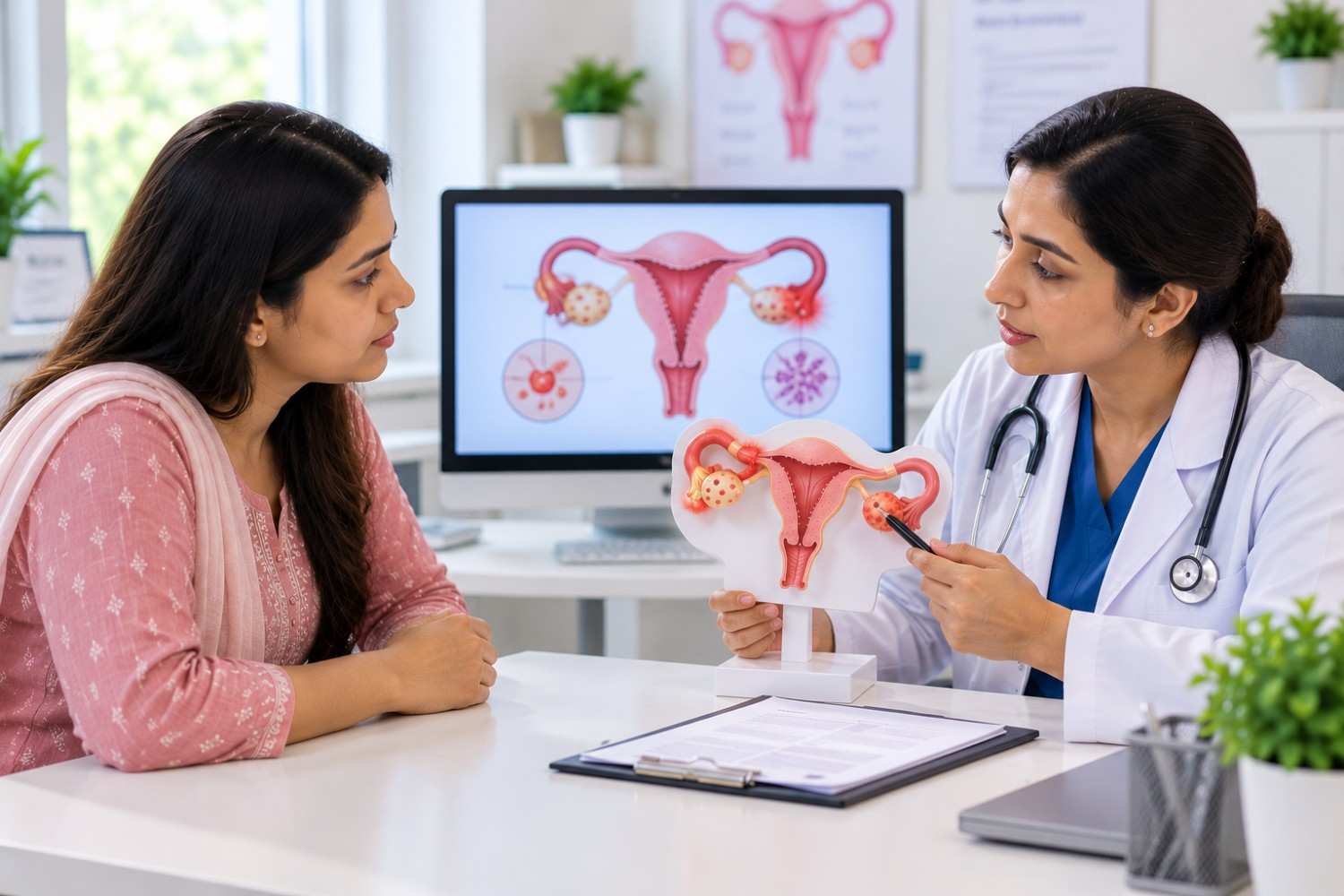
Lower abdominal pain, unusual vaginal discharge or fever can have many causes, and one important one is infection of the female reproductive organs. Pelvic inflammatory disease, or PID, is a common but often under-recognised condition. If it is treated early, most women recover well. If it is ignored or treated late, it can lead to long-term pain and difficulty conceiving. This is why prompt medical attention matters.
This page explains what PID is, what causes it, its symptoms and complications, how it is diagnosed, and how pelvic infections are treated and prevented. It is general educational information. Please do not treat suspected PID with leftover or over-the-counter medicines, as the right treatment depends on a proper evaluation.

PID is an infection of the upper female genital tract, which includes the uterus, the fallopian tubes and the ovaries, and sometimes the surrounding pelvic tissues. It usually begins when bacteria from the vagina or cervix travel upwards into these organs. The infection can be mild and cause few symptoms, or severe enough to need hospital treatment.
PID is most often caused by bacteria that are also responsible for sexually transmitted infections, such as chlamydia and gonorrhoea, but other bacteria, including those associated with bacterial vaginosis, can also be involved. It does not only occur in women with multiple partners, and women are sometimes unaware that they or their partners carry an infection.
In some women, particularly in India, genital tuberculosis can also cause a long-standing pelvic infection that damages the tubes and the lining of the uterus, often discovered during infertility evaluation.
Understanding the factors that make pelvic infections more likely helps with early recognition and prevention:
Symptoms vary widely, and some women have none. When they occur, they may include:
Urgent Care: Please seek urgent medical care if you have severe lower abdominal pain, high fever, repeated vomiting or collapse, as these can signal a severe infection or an abscess.
When PID is not treated promptly, the infection can cause lasting damage. Possible complications include:
Scarring and blockage of the fallopian tubes, which can cause tubal factor infertility.
A higher risk of ectopic pregnancy, in which a pregnancy implants in a damaged tube.
Chronic pelvic pain, caused by scarring and adhesions.
Tubo-ovarian abscess, a collection of pus involving the tube and ovary that may need drainage or surgery.
Hydrosalpinx, a fluid-filled, blocked tube.
The risk of complications is higher with delayed treatment and with repeated episodes, which is why early evaluation is important even when symptoms seem mild.
There is no single test for PID. Doctors diagnose it from your symptoms, an examination and supporting tests, and they usually start treatment promptly when PID is suspected, since delay increases the risk of complications.
Your doctor will ask about your symptoms, periods, sexual health, contraception, recent procedures and previous infections. A pelvic examination checks for tenderness of the cervix, uterus and ovaries and for abnormal discharge.
Swabs from the vagina and cervix are tested for chlamydia, gonorrhoea and other infections. Blood and urine tests may be done to check for infection and inflammation and to exclude pregnancy and urinary infection. Your doctor may also offer testing for other infections such as HIV, syphilis and hepatitis, and tests for tuberculosis when it is suspected.
An ultrasound can show an abscess, a swollen or blocked tube or other complications, and helps to exclude other causes of pelvic pain such as ovarian cysts or ectopic pregnancy.
In uncertain or severe cases, or when the condition does not respond to treatment, laparoscopy allows the pelvic organs to be seen directly and can also be used to drain an abscess. Please see our page on laparoscopy for more detail.
Prompt medical care clears the infection, relieves symptoms, and reduces the risk of long-term reproductive complications.
PID is treated with a combination of antibiotics chosen to cover the likely bacteria, including those that cause sexually transmitted infections and those that live without oxygen. Mild to moderate PID is often treated with tablets and, in some regimens, an injection, with a review within a couple of days to check that you are improving. It is essential to complete the full course, even if you feel better.
Admission and intravenous antibiotics are advised for severe illness, including high fever, vomiting, inability to take oral medicines, a suspected abscess, pregnancy, or when there is no improvement with oral treatment.
Sexual partners should be tested and treated, even if they have no symptoms, to prevent reinfection. It is advised to avoid intercourse until you and your partner have completed treatment and symptoms have settled.
If you have an intrauterine device, your doctor will advise whether it can stay in place while you are treated or whether it should be removed, depending on how you respond.
A tubo-ovarian abscess that does not respond to antibiotics may need to be drained, and surgery is sometimes needed to remove damaged tissue or to treat complications. This is often done laparoscopically where possible.
Pain relievers and rest help with comfort during recovery. A follow-up visit, and sometimes repeat testing, confirms that the infection has cleared. Long-term pelvic pain after PID can be managed with a combination of treatments, and your doctor will guide you.
How pelvic infections affect future pregnancy plans and practical steps to reduce your risk of infection.
Many women recover fully from PID and conceive without difficulty. The chance of tubal damage rises with delayed treatment and repeated infections. If you have had PID and are trying to conceive, a fertility evaluation, including a check of the fallopian tubes, is sensible. Depending on the findings, options include observation, tubal procedures, IUI or IVF, and a fluid-filled blocked tube may need to be treated before IVF. Please see our pages on female infertility and tubal cannulation for more.
Early Pregnancy Note: If you are or could be pregnant and have pelvic pain or bleeding, seek early medical review, since a tubal ectopic pregnancy is more likely after PID.
Dr. Sunita Arora is an obstetrician, gynaecologist and laparoscopic surgeon with more than 23 years of experience. She holds an MBBS from Lady Hardinge Medical College, New Delhi, and an MD in Obstetrics and Gynaecology from UCMS and GTB Hospital, and she is a Fellow of the Indian College of Obstetricians and Gynaecologists (FICOG) and a Fellow of the International College of Surgeons (FICS). She completed a fellowship in Reproductive Medicine at D.Y. Patil University, Mumbai.
Her practice covers general gynaecology, infertility and endoscopic surgery, so both the treatment of the infection and its effect on fertility can be addressed together. Patients are seen in a private, non-judgemental setting.
If you have lower abdominal pain, abnormal discharge, fever or pain during intercourse, or have been told you may have a pelvic infection, a prompt evaluation can prevent complications.
She consults at Safdarjung Enclave and is also associated with Fortis La Femme, Greater Kailash II, serving women across South Delhi, including Greater Kailash, Green Park, Hauz Khas and nearby areas.
Dr Sunita Arora Fertility and Gynae Clinic
Fortis La Femme, South Delhi
Book an appointment with Dr. Sunita Arora, and seek urgent care if you have severe pain, high fever or vomiting.
Find answers to common questions about pelvic inflammatory disease (PID), causes, symptoms, fertility, and treatment options.
Medical disclaimer: This page is for general educational purposes and does not replace personalised medical advice, diagnosis or treatment. Please consult a qualified doctor about your own health. If you have severe abdominal pain, heavy bleeding, fainting or fever, seek urgent medical care.