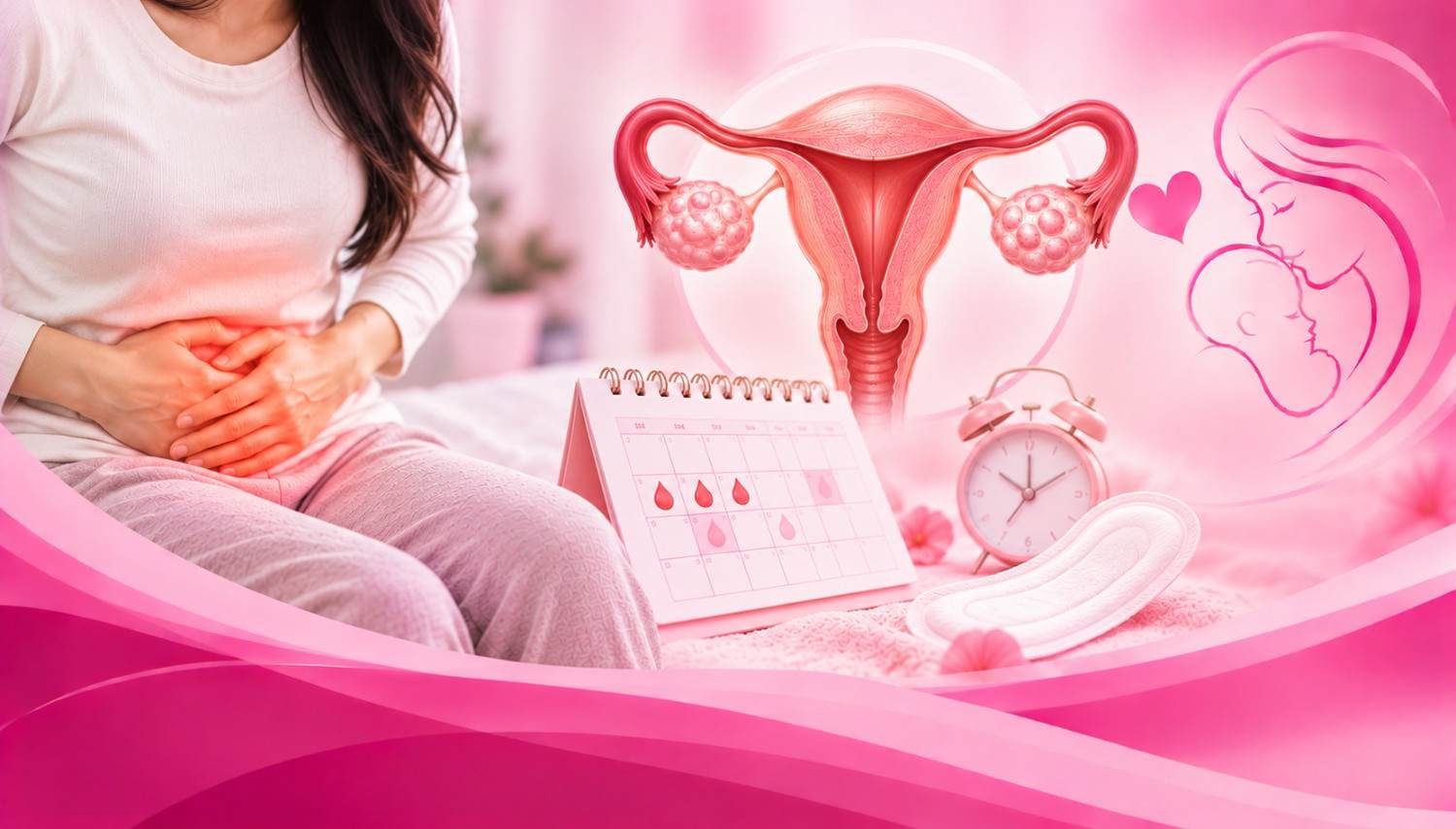
Period pain is so common that many women, and even some doctors, treat it as something to put up with. Mild cramps are indeed normal. But pain that makes you miss school or work, forces you to cancel plans, or leaves you doubled over despite painkillers is not something you simply have to accept. Painful periods, medically called dysmenorrhea, have identifiable causes and many effective treatments.
This page explains the types and causes of painful periods, when the pain may signal an underlying condition, how it is evaluated, and the treatment options from simple home measures to medicines and procedures. It is general educational information. Your own plan can only be made after a personal consultation.

Dysmenorrhea is pain in the lower abdomen, often cramping, that occurs before or during menstruation. It may spread to the lower back and thighs and can be accompanied by nausea, vomiting, loose stools, headache, tiredness or dizziness. It is one of the most common gynaecological complaints in women of reproductive age, and it is a leading reason for missed days of school and work.
There are two types, and the difference matters because their causes and treatment differ.
Primary dysmenorrhea is period pain that is not caused by any other pelvic disease. It is thought to be related to prostaglandins, chemicals produced by the uterine lining that make the uterus contract during menstruation. Higher levels cause stronger contractions and more pain. Primary dysmenorrhea typically:
• Begins within a year or two of the first period, once ovulation is established.
• Starts just before or at the onset of bleeding and lasts for one to three days.
• Tends to improve with age and sometimes after childbirth.
Risk factors include early start of periods, heavy or long periods, a family history of painful periods, smoking and, in some women, stress.
Secondary dysmenorrhea is pain caused by an underlying condition of the reproductive organs. It often begins later in life, may get worse over time and may occur outside periods too. Common causes include:
Treatment is directed at relieving pain and, in secondary dysmenorrhea, at the underlying cause.
• Heat from a hot-water bottle or heating pad applied to the lower abdomen or back.
• Regular physical activity, which is associated with less period pain over time.
• Rest, adequate sleep, relaxation techniques and stress management.
• Staying hydrated and eating a balanced diet. Avoiding smoking is also helpful.
Anti-inflammatory pain relievers, which reduce prostaglandin production, are often the first-line medicine and tend to work best when started at the first sign of pain or bleeding and taken regularly with food for the first couple of days, as advised by your doctor. They are not suitable for everyone, for example women with stomach ulcers, kidney problems, asthma triggered by such medicines, or bleeding disorders, and they should be used as directed. Please do not exceed recommended doses.
Hormonal contraceptive pills, a hormone-releasing intrauterine system and other hormonal medicines reduce the thickness of the uterine lining and prostaglandin production, which lessens pain and bleeding. They are commonly used when pain is not controlled with simple measures, or when contraception is also desired. They are not suitable for women trying to conceive, and your doctor will choose the one that fits your health and plans.
Some women find benefit from transcutaneous electrical nerve stimulation (TENS), and certain supplements and herbal remedies are popular. The evidence for most is limited, so please discuss them with your doctor before use.
When endometriosis, adenomyosis, fibroids, polyps or infection are found, treatment is aimed at these conditions and may include medicines, antibiotics or minimally invasive surgery, such as hysteroscopy or laparoscopy. Please see our pages on hysteroscopy, laparoscopy and endometriosis.
A systematic evaluation helps distinguish primary dysmenorrhea from underlying pelvic conditions and guides targeted treatment.
Your doctor will ask when the pain starts, how long it lasts, how severe it is, how it affects your life, what relieves it, your cycle pattern, bleeding, pain during intercourse, previous infections, contraception and family history. A pelvic examination may be done when appropriate; it is not necessarily needed in young women who have not been sexually active.
Ultrasound can show fibroids, cysts, adenomyosis, endometriomas and some structural differences of the uterus. A normal scan does not exclude all causes, particularly early or superficial endometriosis.
Swabs and urine tests may be advised if infection is suspected.
MRI can provide more detail when the diagnosis is unclear. If severe pain persists despite treatment, or if endometriosis is suspected, laparoscopy allows the pelvis to be examined directly and treated at the same time. Please see our page on laparoscopy.
Important considerations regarding fertility, period pain in adolescents, and signs that require prompt medical evaluation.
Primary dysmenorrhea does not by itself reduce fertility. Secondary causes, particularly endometriosis, adenomyosis, fibroids and pelvic infection, can affect the chance of conceiving, which is a reason to seek evaluation of severe pain, especially if you are planning pregnancy. Please see our page on female infertility.
Period Pain in Teenagers: Painful periods are very common in adolescents and are most often primary dysmenorrhea. However, severe pain, pain that does not respond to treatment, or pain with heavy bleeding, should be evaluated rather than dismissed, since conditions such as endometriosis can start in adolescence. Please see our page on adolescent gynaecology.
Please consult a gynaecologist if your period pain:
Seek urgent care for sudden, severe abdominal pain, fainting, or pain with heavy bleeding or fever.
Dr. Sunita Arora is an obstetrician, gynaecologist and laparoscopic surgeon with more than 23 years of experience. She holds an MBBS from Lady Hardinge Medical College, New Delhi, and an MD in Obstetrics and Gynaecology from UCMS and GTB Hospital, and she is a Fellow of the Indian College of Obstetricians and Gynaecologists (FICOG) and a Fellow of the International College of Surgeons (FICS). She completed a fellowship in Reproductive Medicine at D.Y. Patil University, Mumbai.
Her special interests include endoscopic surgery and infertility, so both the relief of pain and the investigation of its cause can be handled together.
If period pain is affecting your daily life, or if you are unsure whether your pain is normal, a careful evaluation can find the cause and a treatment that works.
She consults at Safdarjung Enclave and is also associated with Fortis La Femme, Greater Kailash II, serving women across South Delhi, including Greater Kailash, Green Park, Hauz Khas and nearby areas.
Dr Sunita Arora Fertility and Gynae Clinic
Fortis La Femme, South Delhi
Book an appointment with Dr. Sunita Arora, and bring any previous scans and reports.
Find answers to common questions about period pain, dysmenorrhea causes, evaluation, fertility, and treatment options.
Medical disclaimer: This page is for general educational purposes and does not replace personalised medical advice, diagnosis or treatment. Please consult a qualified doctor about your own health. If you have severe abdominal pain, heavy bleeding, fainting or fever, seek urgent medical care.